

In the world of audio production, the positioning of microphones plays a crucial role in achieving high-quality recordings. At Cherry Beach Sound, a premier Toronto voiceover and music studio, our expert engineers understand the nuances of microphone placement and its impact on the clarity, warmth, and overall quality of recordings.
This article explores the essential techniques and considerations for optimal microphone positioning in various recording scenarios.
Selecting the Right Microphone: The Foundation of Superior Sound
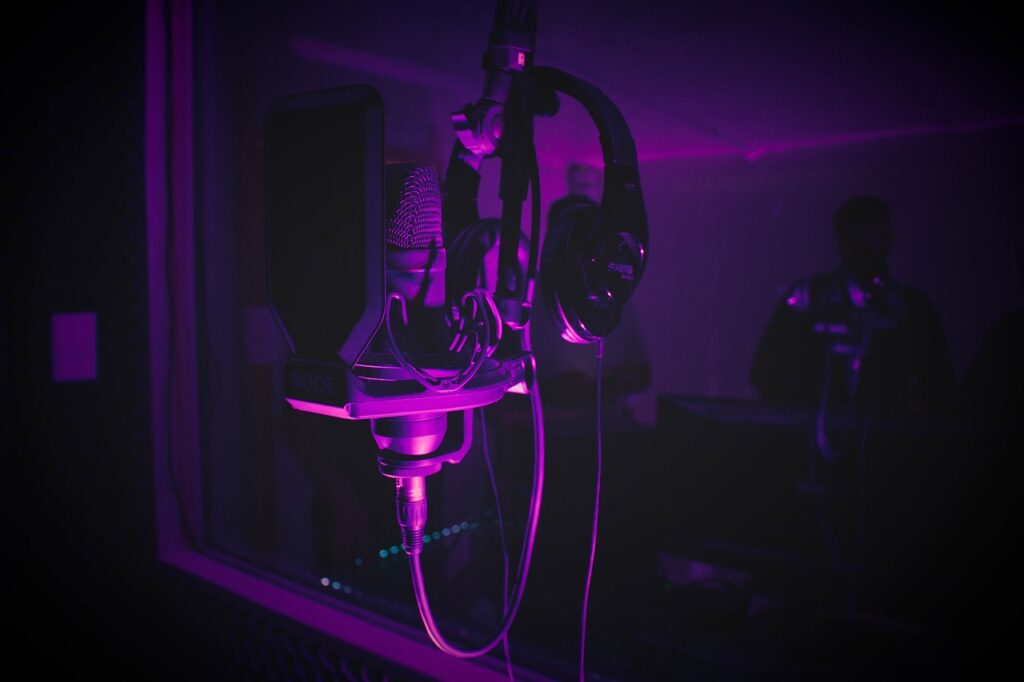
The first step in ensuring a successful recording is choosing the appropriate microphone for the task at hand. Different microphones have unique characteristics that suit various recording purposes:
- Dynamic Microphones: Robust and less sensitive to ambient noise, these are ideal for live performances and louder sound sources. They’re also suitable for voiceover work in less controlled environments.
- Condenser Microphones: Known for their sensitivity and wide frequency response, condenser mics are often the preferred choice for studio recordings of vocals, both in music and spoken word. Their ability to capture subtle details makes them particularly suitable for nuanced vocal performances in voiceover and ADR (Automated Dialogue Replacement) sessions.
- Ribbon Microphones: While more delicate, ribbon mics offer a smooth, natural sound. They’re favored for certain styles of music and can add richness to voice recordings, complementing certain voiceover or ADR applications.
Distance and Placement: Mastering Proximity Effect and Sound Characteristics
The placement of a microphone significantly influences the tonal quality of a recording. Two critical factors to consider are the distance from the microphone and its angle relative to the sound source.
Proximity Effect
This phenomenon occurs when the microphone is placed close to the sound source, emphasizing lower frequencies and imparting a sense of warmth or fullness. While this effect can be desirable for certain musical or voiceover recordings, it must be carefully managed to avoid overpowering low-end frequencies.
For voiceover work in Toronto studios, placing the mic within 6-12 inches from the mouth is common practice. However, this distance should be adjusted based on the voice’s natural timbre and the desired outcome.
Angle
Positioning the microphone at a slight angle to the vocalist’s mouth is crucial for avoiding plosive sounds (hard “p” and “b” sounds) and minimizing sibilance (sharp “s” sounds). This is especially important in voiceover work, where clarity and articulation are paramount.
Height and Level: Aligning with the Performer’s Natural Voice
Ensuring that the microphone is placed at the correct height and level is another fundamental aspect of microphone positioning. Typically, aligning the microphone with the vocalist’s mouth is standard practice in Toronto ADR and voiceover studios.
Ear Level Positioning
Aligning the microphone at ear height helps capture a balanced, natural tone from the vocalist. This position allows the microphone to pick up the full range of frequencies produced by the voice without emphasizing one aspect over another.
For vocalists with a more powerful voice, raising the microphone slightly above the mouth can help soften the high frequencies and create a more balanced recording. Conversely, lowering the microphone below the mouth can emphasize the lower frequencies for a deeper, richer tone.
Room Acoustics: Enhancing or Reducing Reflections
The environment in which recording takes place is just as important as the microphone and its placement. Room acoustics play a major role in how sound interacts with the space and how it is captured by the microphone.
Reflections and Absorption
Uncontrolled reflections from hard surfaces can cause reverb and echo, which might muddy the vocal recording. At Cherry Beach Sound, our Toronto music studio uses professional-grade sound treatment like acoustic panels, baffles, and diffusers to absorb unwanted reflections and create a controlled recording environment.
For voiceover or ADR sessions, where a clean and clear sound is essential, our recording spaces are specifically designed to eliminate unnecessary room coloration.
Multiple Microphone Techniques: Capturing Complex Vocals

In certain recording sessions, especially in music production, using more than one microphone can yield a richer and more layered sound.
Blending Microphone Types
Using a dynamic mic in combination with a condenser mic can capture both the punchy immediacy of a vocalist’s performance and the finer nuances of their voice. For example, the dynamic mic could focus on the midrange and lower frequencies, while the condenser captures the clarity and high-end details.
Essential Accessories: Pop Filters and Windscreens
One of the simplest yet most effective tools for improving the clarity of a vocal recording is the use of pop filters or windscreens.
Plosive Prevention
When placed between the microphone and the vocalist, a pop filter helps prevent plosives, which can cause distortion or unwanted low-frequency bursts in the recording. This is especially important for close-mic techniques where the vocalist is positioned close to the microphone.
Continuous Monitoring and Adjustment
A critical part of any recording session is real-time monitoring and adjustment. While all of the above techniques are essential, nothing replaces the need for careful listening and making real-time adjustments based on feedback.
Engineer Expertise
An experienced sound engineer will continuously monitor the recording, adjusting microphone placement and levels as necessary to accommodate changes in the vocalist’s performance or the specific needs of the recording session.
Leveraging Cherry Beach Sound’s Expertise
At Cherry Beach Sound, we combine cutting-edge recording technology with years of experience in microphone placement to ensure that every recording session delivers professional-grade results.
Whether you’re recording a voiceover for a commercial, vocal tracks for a song, or ADR for film and television in Toronto, our team of engineers has the expertise to capture your voice with clarity, precision, and depth. Contact us today to learn more about our voiceover, music, and ADR services and how we can elevate your next project.
Proper microphone positioning enhances vocal clarity, reduces unwanted noise, and improves overall sound quality in voiceover recordings.
Condenser microphones are commonly preferred for voiceovers and ADR due to their sensitivity and ability to capture fine details, offering a clear and natural sound.
The proximity effect boosts lower frequencies when the microphone is close to the sound source, adding warmth to the voice. However, it must be carefully managed to avoid overpowering low-end frequencies.
Room acoustics influence sound reflections, which can cause reverb or echo. At Cherry Beach Sound, we use acoustic treatment to minimize unwanted reflections and create a clean recording environment.
Pop filters and windscreens are essential accessories that reduce plosive sounds and prevent distortion in vocal recordings, especially when using close-mic techniques.